This is exciting news for anyone who conducts adversary emulation (something we do extensively as part of our Network Defense Range engagements) or studies adversary actions (which is fairly applicable to most everyone in Information Security).
These adversary emulation plans outline the actual actions of an adversarial attack, down to the commands executed. And better yet, presribes a thoughtful framework and schema for describing the procedures executed. Each procedure is mapped to applicable MITRE ATT&CK technique(s), which further provides the ability to analyze defenseive posture against a specific adversary.
This is a goldmine of information about adversary behaviors and gives us a way to automate this information into our SOC processes. Additionally, having common designs and frameworks to communicate adversary behavior, can event clarify discussions about defensive capabilities.
Use Case
In a previous post, we oulined how we use MITRE ATT&CK Navigator to visualize our defenseive posture. Specifically…
we can quickly respond to a new adversarial TTP and focus on improving our coverage
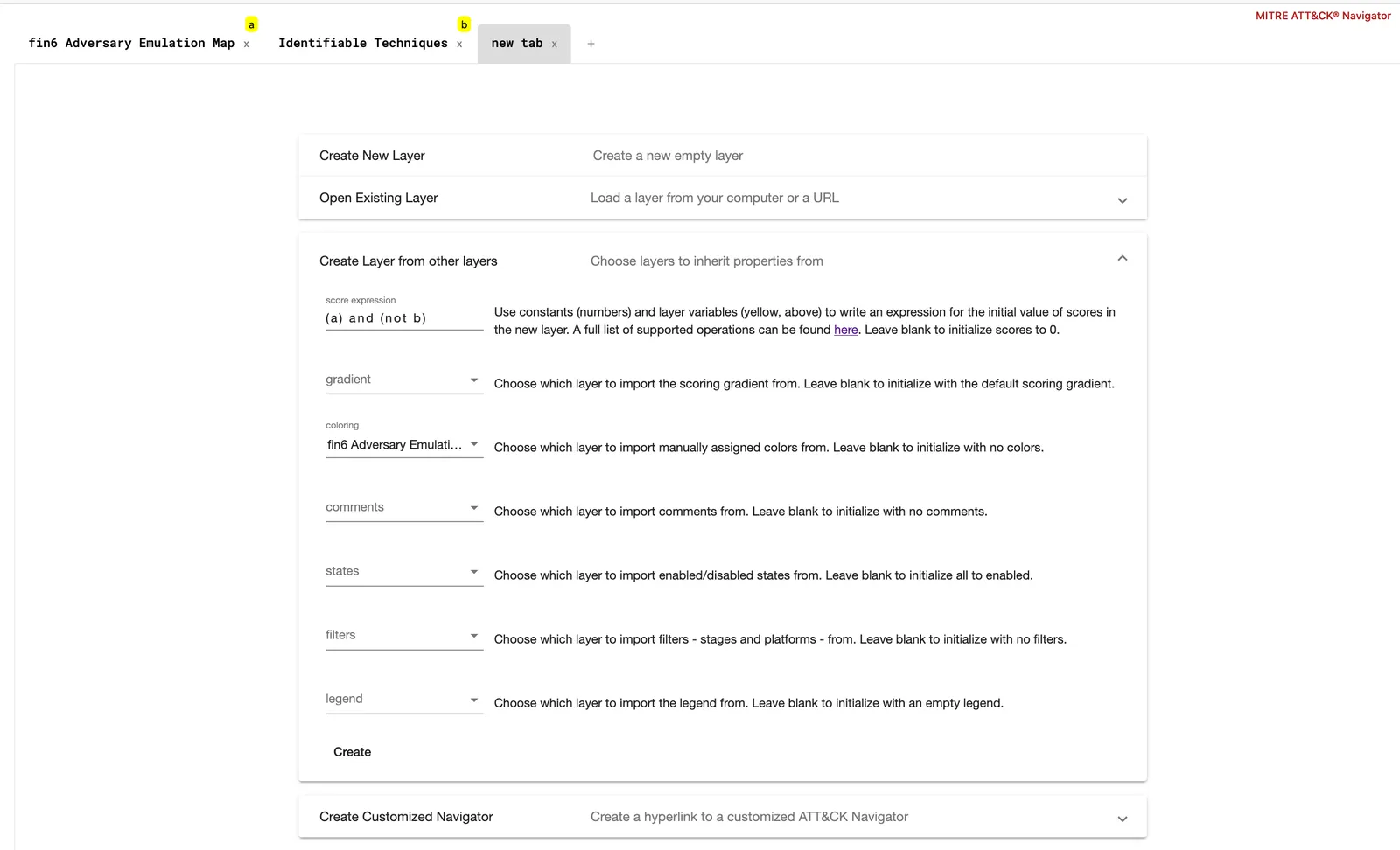
ATT&CK Navigator has an awesome feature which allows us to dynamically build “calculated” layers from other, existing layers. So, if we can build a Navigator layer from the Adversary Emulation Plan, and compare it against our real-time defensive capability map, we can quickly, and visually, identify where our gaps may exist in identifying this particular adversary.
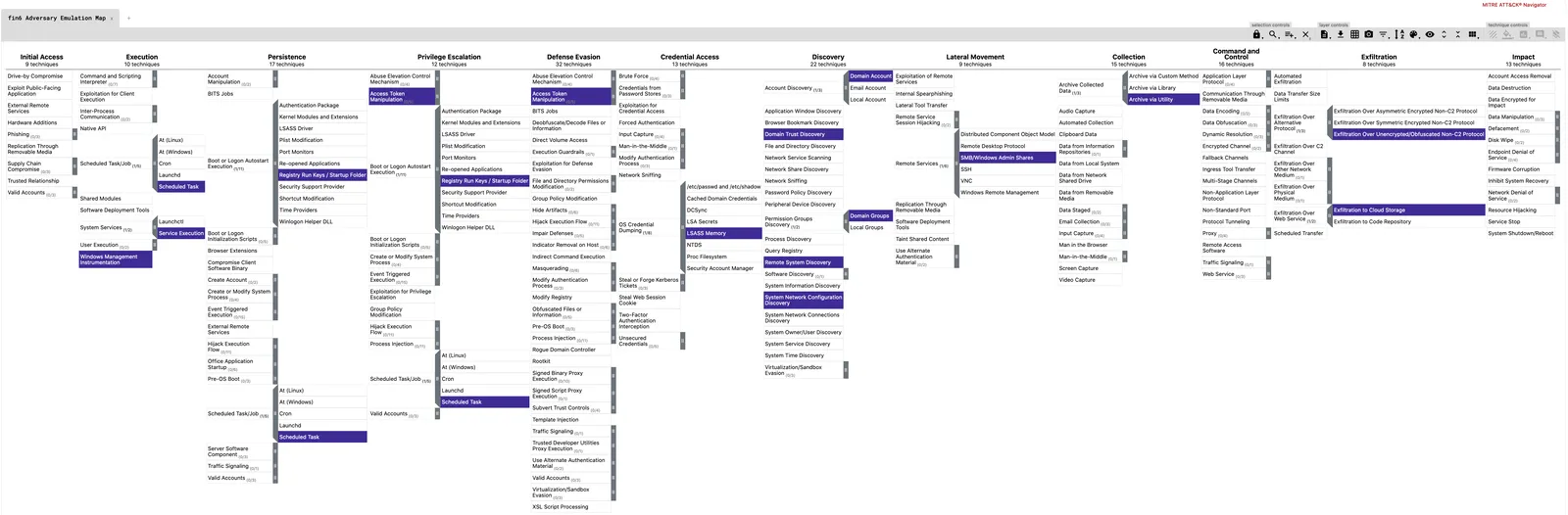
At the time of writing, layer images exist for the emulation plans, but no actual layers exist. So, like any good haxors, we wrote something. Enter: adversary-emulation-map, a Python script which reads emulation plans and generates an ATT&CK Navigator layer based on the techniques recorded in the plan of your choosing.
Here is the output of the “fin6” plan:
Now, we can build a calculated layer against both our Data Sources map and our Identifiable Techniques map to quickly visualize the techniques we are best suited to utilize.
Final Thoughts
If you check out this post on the OpenSOC blog you will notice that we love yaml and automation. The contributors to the Adversary Emulation Library were thoughtful enough to build out a JSON schema which we can use in an IDE of our choosing (in this case: VS Code) to assist in building additional emulation plans in the same, awesome format:
Discover how cybercriminals trick users with fake CAPTCHA pages to deploy malware and learn effective detection techniques to safeguard your systems against these evolving threats.
The blog post provides a detailed guide on creating SigmaHQ detections. It explains the process of selecting relevant log data and translating it into a Sigma detection rule, emphasizing the importance of customized detections for better security monitoring.
Learn effective threat hunting strategies from Luke Rusten's insights on prioritization, continuous improvement, and practical techniques to enhance your organization's security operations.